Nelson Mandela (1918-2013)

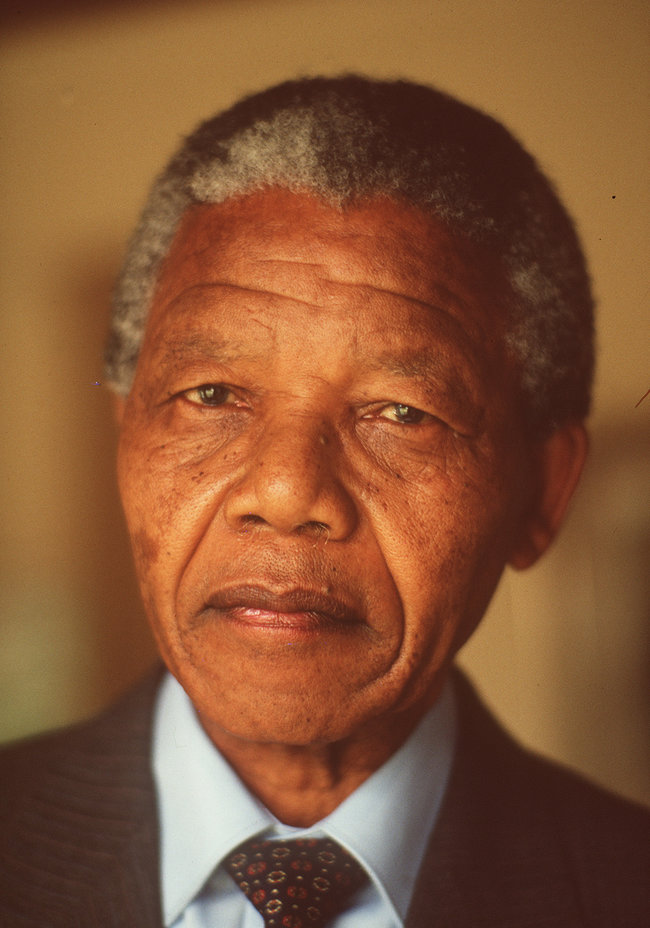
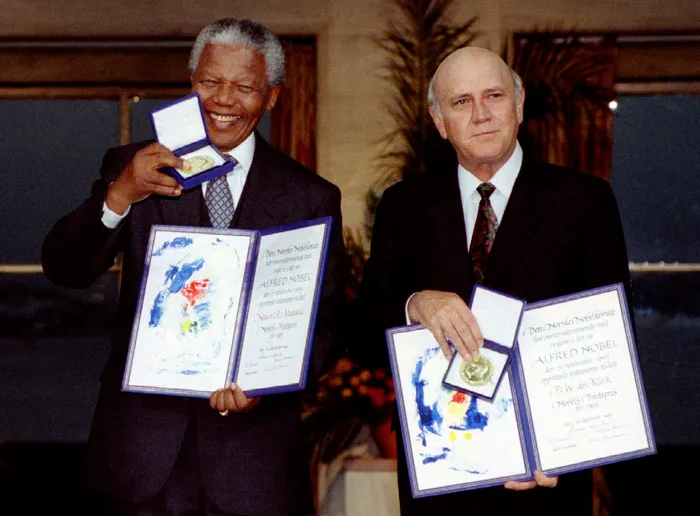
Nelson Mandela was a revolutionary leader who fought against apartheid in South Africa. After spending 27 years in prison for opposing racial segregation, he emerged as a symbol of peace and reconciliation. In 1994, he became South Africa’s first Black president and worked to unite a deeply divided nation. He received the Nobel Peace Prize in 1993 for his efforts to dismantle apartheid peacefully.
Why he is powerful: His moral courage, resilience, and commitment to forgiveness changed a nation and inspired the world.
Nelson Mandela
Nelson Rolihlahla Mandela (1918–2013) was a South African anti-apartheid revolutionary, lawyer, and statesman who became the country’s first Black president (1994–1999). Imprisoned for 27 years for opposing apartheid, he emerged as a global symbol of reconciliation, justice, and human rights, earning the 1993 Nobel Peace Prize with F.W. de Klerk for ending institutionalized racial segregation.(Encyclopedia Britannica)
Key facts
Born: July 18, 1918, Mvezo, South Africa
Died: December 5, 2013, Johannesburg, South Africa
Presidency: South Africa, 1994–1999
Political affiliation: African National Congress (ANC)
Major honor: Nobel Peace Prize (1993)
Early life and activism
Mandela, born into the Thembu royal family, studied law at Fort Hare and the University of Witwatersrand. In 1944 he joined the ANC, co-founding its Youth League to mobilize mass resistance against apartheid. His leadership in the 1952 Defiance Campaign and the 1955 Freedom Charter defined his commitment to equality and nonracial democracy.
Imprisonment and international symbol
Following the 1960 Sharpeville massacre, Mandela co-founded Umkhonto we Sizwe (“Spear of the Nation”), adopting limited sabotage against apartheid structures. Arrested in 1962, he was sentenced to life imprisonment in 1964 during the Rivonia Trial. His 27-year incarceration—mostly on Robben Island—galvanized worldwide campaigns calling for his release and the dismantling of apartheid.
Presidency and reconciliation
Released in 1990, Mandela led negotiations with President de Klerk that culminated in South Africa’s first multiracial elections (April 1994). As president, he prioritized national unity, the Truth and Reconciliation Commission, and social reconstruction while promoting sports, notably during the 1995 Rugby World Cup, as a tool for healing divisions.
Later life and legacy
After leaving office in 1999, Mandela championed education, health, and peace through the Nelson Mandela Foundation and co-founded The Elders, a council of global leaders addressing humanitarian crises. In 2009 the UN declared July 18 “Nelson Mandela International Day.” Remembered as “Madiba,” he remains a universal emblem of forgiveness and equality.


