Biography Online of All famous peoples

Jeff Bezos (1964 - ) Biography

 🛒Jeff Bezos

Born: January 12, 1964 | Country: United States

Jeff Bezos founded Amazon in 1994 as an online bookstore. It grew into one of the largest e-commerce and cloud computing companies in the world.

He also owns The Washington Post and founded the space company Blue Origin.

Impact: Transformed global retail and cloud computing.

Jeff Bezos

Jeff Bezos (born January 12, 1964) is an American entrepreneur and investor best known as the founder of Amazon. He transformed online retail, expanded into cloud computing, and later founded Blue Origin, advancing private spaceflight. His ventures in technology, media, and space have made him one of the world’s most influential business figures and wealthiest individuals.

Key facts

  • Full name: Jeffrey Preston Bezos

  • Born: January 12, 1964 (age 61), Albuquerque, New Mexico, U.S.

  • Education: B.S.E. in Electrical Engineering & Computer Science, Princeton University (1986)

  • Founded: Amazon (1994), Blue Origin (2000)

  • Net worth: About $239 billion (2025, Forbes estimate)

  • Spouse: Lauren Sánchez (married 2025); formerly married to MacKenzie Scott

Early Life and Education

Born Jeffrey Preston Jorgensen, Bezos was adopted by Miguel “Mike” Bezos after his mother, Jacklyn Gise, remarried. Raised in Texas and Florida, he displayed early curiosity and mechanical talent. As valedictorian of Miami Palmetto Senior High School, he created the “Dream Institute,” a summer camp promoting creative thinking. He graduated summa cum laude from Princeton University in 1986, majoring in electrical engineering and computer science. 

Founding and Growth of Amazon

After working on Wall Street at D. E. Shaw & Co., Bezos left in 1994 to start an online bookstore from his Seattle garage. Amazon quickly expanded into a broad e-commerce platform offering everything from electronics to apparel and pioneered customer reviews, personalized recommendations, and one-click shopping. Under his leadership, Amazon Web Services (AWS) became the world’s largest cloud-computing provider, and Amazon Studios extended the company into entertainment. Bezos stepped down as CEO in 2021, becoming executive chair. 

Other Ventures and Investments

Bezos founded Blue Origin in 2000 to develop reusable rockets and lower the cost of space access. Its New Shepard vehicle achieved crewed flights, including one with Bezos and his brother Mark in 2021. In 2013, he purchased The Washington Post for $250 million, revitalizing its digital model. His investment firm, Bezos Expeditions, holds stakes in Uber, Airbnb, and other technology startups. 

Personal Life and Public Image

Bezos married novelist MacKenzie Scott in 1993; they divorced in 2019, with Scott receiving 4 % of Amazon stock. In 2025, he married journalist and pilot Lauren Sánchez in Venice. Known for his philanthropy through the Bezos Earth Fund and the Bezos Day One Fund, he also attracts media attention for his luxury lifestyle, including ownership of the $500 million super-yacht Koru

Legacy

Bezos’s vision reshaped global commerce, logistics, and cloud infrastructure. His leadership ethos—“customer obsession” and long-term innovation—set new corporate standards. Through Blue Origin, he continues to advocate for expanding human life beyond Earth, cementing his influence on both technology and space exploration. 

Michael Jackson Biography - “King of Pop.”

Michael Jackson

Early Life

Michael Joseph Jackson was born on August 29, 1958, in Gary, Indiana, US. He was the eighth of ten children in the Jackson family, a working-class African-American family with strong musical roots. His father, Joseph Jackson, managed the family’s musical endeavors, and Michael, along with his brothers, formed The Jackson 5, which rose to fame in the late 1960s.


Rise to Fame

Michael quickly became the standout member of The Jackson 5 due to his extraordinary vocal talent and stage presence. Hits like “I Want You Back” and “ABC” made him a household name.

In 1971, he began a solo career, releasing albums that showcased his distinctive voice, rhythm, and creativity. His 1979 album Off the Wall was a critical and commercial success, blending pop, funk, and disco.


Thriller Era and Global Icon

Jackson’s 1982 album Thriller became the best-selling album of all time. The groundbreaking music videos for “Thriller”, “Beat It”, and “Billie Jean” revolutionized the music industry and MTV.

During this period, Michael also became known for his signature dance moves, especially the moonwalk, which became an iconic part of his performances.


Later Career

He continued to innovate musically with albums like Bad and Dangerous, producing hits that dominated the charts worldwide. He collaborated with artists across genres, cementing his reputation as the “King of Pop.”

Despite immense success, his later years were marked by personal challenges, including health issues and controversies that attracted widespread media attention.


Philanthropy

Michael Jackson was also a dedicated philanthropist, supporting dozens of charities related to children, education, and health. He co-wrote “We Are the World” in 1985 to raise funds for famine relief in Africa.


Death and Legacy

Michael Jackson passed away on June 25, 2009, in Los Angeles, California, US, at the age of 50 due to acute propofol and benzodiazepine intoxication. His death shocked the world, and his influence on music, dance, and pop culture remains unmatched.

Today, he is remembered not only for his music but also for his contributions to humanitarian causes and his role in breaking racial barriers in the music industry. Michael Jackson’s artistry continues to inspire generations of performers worldwide.


Michael Jackson Timeline

1958 – Born Michael Joseph Jackson on August 29 in Gary, Indiana, US.

1964 – Joins his brothers in The Jackson 5, beginning his professional music career.

1969 – The Jackson 5 sign with Motown Records; first hit single: “I Want You Back”.

1971 – Begins solo career with Motown; releases first solo albums.

1979 – Releases Off the Wall. Hits include “Don’t Stop ‘Til You Get Enough” and “Rock with You”. Wins his first Grammy Award.

1982 – Releases Thriller, the best-selling album of all time. Iconic music videos: “Thriller”, “Beat It”, “Billie Jean”.

1983 – Performs the moonwalk during a televised performance of “Billie Jean”, cementing his status as a global icon.

1984 – Wins 8 Grammy Awards in one night, including Album of the Year for Thriller.

1987 – Releases Bad; produces hits like “Bad”, “Smooth Criminal”, and “Man in the Mirror”.

1991 – Releases Dangerous, featuring hits “Black or White” and “Remember the Time”.

1993 – Faces first high-profile child sexual abuse allegations; settles out of court.

1995 – Marries Lisa Marie Presley; divorced in 1996.

1997 – Releases Blood on the Dance Floor: HIStory in the Mix, a remix album with new songs.

2001 – Releases Invincible, his final studio album.

2005 – Acquitted of all charges in a high-profile child molestation trial.

2009 – Dies on June 25 in Los Angeles, California, US at age 50 from acute propofol and benzodiazepine intoxication.

Posthumous Legacy – Continues to influence music, dance, and pop culture; numerous posthumous releases and tributes celebrate his work, including the album Michael.


Nikola Tesla Biography

 Nikola Tesla

Born: July 10, 1856 – Smiljan
Died: January 7, 1943 – New York City
Nationality: Serbian-American
Known for: Alternating current (AC) electricity, Tesla coil, radio, induction motor


Early Life

Nikola Tesla was born into a Serbian family in Smiljan, in what is now Croatia. His father was a priest in the Serbian Orthodox Church, and his mother, although uneducated formally, was highly inventive, inspiring Tesla’s interest in engineering and innovation. Tesla showed extraordinary memory and mathematical ability from an early age.

He studied electrical engineering at the Austrian Polytechnic and later in Prague, although he did not graduate. During his studies, he became fascinated with electricity and envisioned innovations that would later transform the world.


Career and Major Inventions

Tesla began his career working for Continental Edison Company in Paris before moving to the United States in 1884. There, he briefly worked with Thomas Edison but eventually pursued his own ideas.

Some of his most important contributions include:

  • Alternating Current (AC) System: Tesla’s AC system became the standard for global power transmission, beating Edison’s direct current (DC) in the “War of Currents.”

  • Tesla Coil: High-voltage transformer used in radio technology and experiments with wireless electricity.

  • Induction Motor: Powered by AC and widely used in modern industry.

  • Radio: Tesla’s experiments in wireless communication predated some of Marconi’s work, leading to disputes over patents.

  • Remote Control & Robotics: He demonstrated a radio-controlled boat in 1898, pioneering early ideas of automation.

Tesla envisioned a world with wireless power transmission and advanced technology far beyond his time. Many of his ideas influenced modern electronics, robotics, and renewable energy.


Later Years

Tesla spent much of his later life in New York City, living modestly and continuing his experiments. He was known for eccentric habits, extreme focus on work, and visionary ideas. Despite his profound contributions, he faced financial difficulties and died largely in obscurity in 1943 at the age of 86.


Legacy

Tesla is celebrated as one of history’s greatest inventors and visionaries. His name lives on in the unit of magnetic flux density (tesla) and in companies like Tesla, Inc., which honor his pioneering spirit in electricity and innovation.


Tesla Timeline

  • 1856: Born in Smiljan.

  • 1875–1878: Studied electrical engineering at Austrian Polytechnic.

  • 1881–1884: Worked in Budapest and Paris; developed ideas for the rotating magnetic field and AC motors.

  • 1884: Moved to New York City; briefly worked with Thomas Edison.

  • 1887–1888: Patented the AC induction motor and other alternating current devices; presented AC system to the American Institute of Electrical Engineers.

  • 1891: Invented the Tesla Coil, enabling experiments with high-voltage, high-frequency electricity.

  • 1893: Demonstrated wireless power and lighting at the World’s Columbian Exposition in Chicago.

  • 1898: Demonstrated the first radio-controlled boat in Madison Square Garden.

  • 1900s: Worked on plans for wireless energy transmission at Wardenclyffe Tower in Shoreham, New York (project eventually abandoned).

  • 1920s–1930s: Continued experiments with advanced electricity concepts and visionary inventions; lived modestly in New York hotels.

  • 1943: Died in New York City at the age of 86.


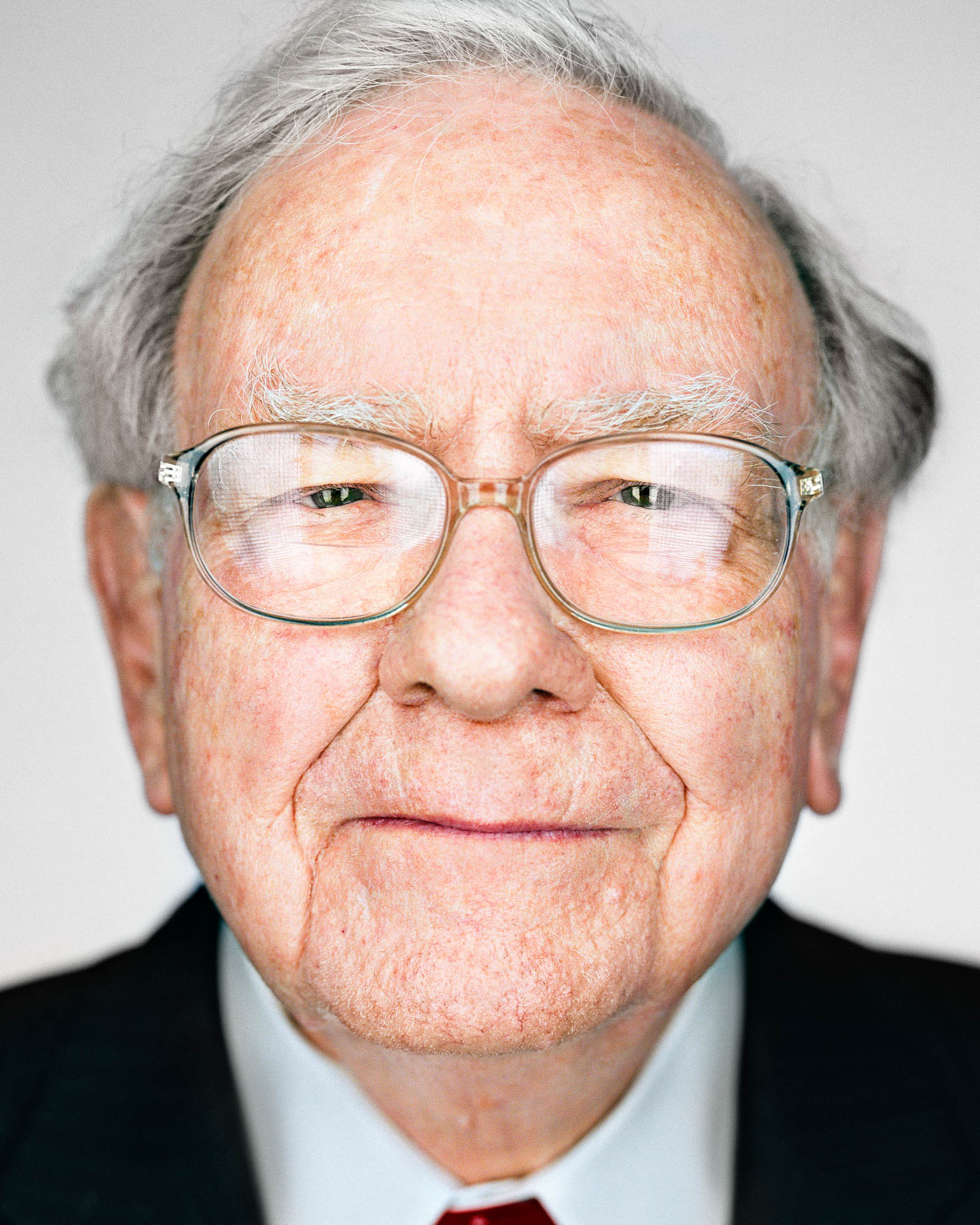
Warren Buffett (1930 - --) Biopgraphy

Image

 📈  Warren Buffett

Born: August 30, 1930 | Country: United States

Known as the “Oracle of Omaha,” Warren Buffett is one of the most successful investors of all time. As chairman and CEO of Berkshire Hathaway, he built a massive business empire by investing in strong, long-term companies.

Despite his wealth, he is known for his simple lifestyle and commitment to donating most of his fortune to charity.

Impact: Master of value investing and long-term wealth building.

Warren Buffett

Warren Buffett (born August 30, 1930) is an American investor, business magnate, and philanthropist. Known as the “Oracle of Omaha,” he led Berkshire Hathaway for six decades, earning global recognition as one of history’s most successful long-term value investors. His modest lifestyle, disciplined philosophy, and massive philanthropic commitments have made him an enduring cultural and financial figure.

Key facts

  • Full name: Warren Edward Buffett

  • Born: August 30, 1930 (Omaha, Nebraska, U.S.)

  • Primary role: Chairman and CEO, Berkshire Hathaway (1965 – 2025)

  • Net worth: ≈ $160 billion (2025, Forbes estimate)

  • Major honor: Presidential Medal of Freedom (2011)

  • Image

Early life and education

Buffett, the son of Congressman Howard Buffett, showed an entrepreneurial streak early—selling gum, newspapers, and even running a pinball-machine business. After earning a bachelor’s at the University of Nebraska and a master’s in economics at Columbia University, he studied under Benjamin Graham, whose value-investing principles became the foundation of Buffett’s lifelong approach. 

Berkshire Hathaway and investing philosophy

Taking control of Berkshire Hathaway in 1965, Buffett shifted it from textiles to a vast holding company with subsidiaries like GEICO, Duracell, BNSF Railway, and Dairy Queen. Berkshire’s returns have averaged roughly 20 percent annually—double the S&P 500’s rate—built on Buffett’s tenets of buying undervalued, well-managed businesses and holding them indefinitely. 

Philanthropy and legacy

Buffett pledged 99 percent of his fortune to charity, mainly through the Bill & Melinda Gates Foundation and his family’s Susan Thompson Buffett Foundation. In 2010, with Bill and Melinda Gates, he co-founded the Giving Pledge, urging billionaires to donate most of their wealth. His plainspoken letters to shareholders, frugality, and ethical tone have inspired generations of investors and executives alike. 

Personal life and recognition

Buffett married Susan Thompson in 1952 and, after her death, Astrid Menks in 2006. He still resides in his modest Omaha home bought in 1958 for $31,500 and remains active in his nineties, playing bridge and ukulele. In 2025 he stepped down as Berkshire CEO, with Greg Abel succeeding him, closing one of the longest and most influential executive careers in American business. 

Thomas Alva Edison Biography

 Thomas Alva Edison

Born: February 11, 1847 – Milan
Died: October 18, 1931 – West Orange
Nationality: American
Known for: Electric light bulb improvements, phonograph, motion picture camera, industrial research labs


Early Life

Thomas Alva Edison was born in Milan, Ohio, and grew up in Port Huron. He had little formal schooling and was largely homeschooled by his mother. As a child, he developed hearing problems, which persisted throughout his life.

From a young age, Edison showed curiosity and entrepreneurial spirit—selling newspapers and candy on trains and conducting chemistry experiments in a baggage car.


Early Career

As a teenager, Edison worked as a telegraph operator. His experience with telegraphy sparked his interest in electrical devices and communication systems. In the late 1860s, he began inventing and improving telegraph equipment, earning money from his patents.


Major Inventions

Edison held over 1,000 patents in the United States. Some of his most important inventions include:

  • Phonograph (1877): The first machine capable of recording and playing back sound.

  • Practical Incandescent Light Bulb (1879): He improved earlier designs to create a longer-lasting, commercially viable bulb.

  • Motion Picture Camera: Helped develop early film technology through devices like the Kinetoscope.

  • Electric Power Distribution Systems: Built one of the first electrical power stations in New York City.

In 1876, Edison established a famous research laboratory in Menlo Park, often called the world’s first industrial research lab. Later, he expanded his work in West Orange, New Jersey.


Business Ventures and Rivalry

Edison founded several companies, including General Electric (which evolved from his earlier companies).

He was involved in the “War of Currents,” a rivalry over electrical systems with Nikola Tesla and George Westinghouse, who promoted alternating current (AC), while Edison supported direct current (DC).


Later Years and Legacy

Edison continued inventing into his later years, working on storage batteries, cement production, and other projects. He became one of the most famous inventors in history and a symbol of innovation and perseverance.

He died in 1931 at his home in West Orange, New Jersey. Today, Edison is remembered as one of the most influential inventors of the modern industrial age.


Summary

Thomas Edison was an American inventor and entrepreneur who revolutionized modern life with inventions like the phonograph, the practical electric light bulb, and early motion picture technology. Largely self-educated, he founded the first industrial research lab and held over 1,000 patents. Edison’s innovations not only shaped technology but also the way industries approached research and development.


Timeline

  • 1847: Born in Milan, Ohio.

  • 1854–1859: Homeschooled by his mother; experimented with chemistry.

  • 1860s: Worked as a telegraph operator; began inventing telegraph-related devices.

  • 1877: Invented the phonograph.

  • 1879: Developed a practical incandescent light bulb.

  • 1880s: Established the Menlo Park research lab; worked on electric power distribution.

  • 1887–1891: Involved in the “War of Currents” against Nikola Tesla and George Westinghouse.

  • 1890s–1920s: Expanded inventions to motion pictures, storage batteries, and other technologies.

  • 1931: Died in West Orange, New Jersey.


🔎 Thomas Alva Edison Short Biography & Mindset in Action

  • Early Struggles: Edison had little formal schooling and was partially deaf, yet he developed a lifelong habit of self-education. His belief in persistence (“99% perspiration”) reflected his intense work ethic from a young age.

  • Relentless Experimentation: While developing the practical electric light bulb at his lab in Menlo Park, Edison and his team tested thousands of filament materials. This is where his famous attitude toward “10,000 ways that won’t work” became reality.

  • Industrial Innovation: He didn’t just invent devices — he created systems. His work on electric power distribution helped lay the foundation for modern utilities, later forming companies that became part of General Electric.

  • Motion Pictures & Sound: Edison also contributed to early motion picture technology and improved the phonograph, showing his constant push toward practical, marketable innovation.


Gurjapneet Singh – Biography

🏏 Gurjapneet Singh – Biography

Gurjapneet Singh is a rising Indian fast bowler known for his pace, height, and impressive performances in domestic cricket and the IPL setup.


📌 Basic Information

  • Full Name: Gurjapneet Singh
  • Date of Birth: 8 November 1998
  • Birthplace: Ludhiana, Punjab, India
  • Height: Around 6 ft 3–4 in
  • Batting Style: Right-handed
  • Bowling Style: Left-arm fast-medium
  • Role: Bowler

👶 Early Life & Education

Gurjapneet was born in Ludhiana and spent much of his childhood in Ambala, Haryana. Later, he moved to Chennai at a young age to pursue cricket seriously. He studied at Guru Nanak College, Chennai, where he developed his cricketing skills.


🏏 Domestic Career

  • Started playing club cricket in Chennai (Egmore RC).
  • Gained attention in the Tamil Nadu Premier League (TNPL) playing for teams like:
    • Dindigul Dragons
    • Madurai Panthers
  • In 2023 TNPL, he emerged as one of the top wicket-takers.

🌟 Breakthrough Moment

  • Made his Ranji Trophy debut (2024) for Tamil Nadu.
  • Took 6 wickets for 22 runs in his first match — a standout performance.
  • Dismissed top batter Cheteshwar Pujara for a duck.

🧠 Notable Experience

  • Worked as a net bowler for Team India.
  • Famously bowled out Virat Kohli in the nets, who later gave him valuable advice.

🏆 IPL Career

  • Bought by Chennai Super Kings in the IPL 2025 auction for around ₹2.2 crore.
  • Previously served as a net bowler for the same franchise.

💪 Playing Style

  • Tall fast bowler who generates extra bounce and pace
  • Known for:
    • Swing with the new ball
    • Yorkers at the death
    • Deceptive slower balls
  • Regularly bowls in the 130+ km/h range

📈 Achievements & Highlights

  • Strong debut season in Ranji Trophy
  • Among top wicket-takers in TNPL
  • Selected for India A squad (2025)
  • Known as one of Tamil Nadu’s emerging pace talents

📊 Career Snapshot (approx.)

  • First-class matches: 8+
  • Wickets: 30+
  • Best bowling: 6/22
  • T20 wickets: 20+

⭐ Summary

Gurjapneet Singh is considered one of India’s promising young fast bowlers. With strong domestic performances, IPL exposure, and guidance from top players, he is seen as a future prospect for the Indian national team.

Albert Einstein – Biography

 Albert Einstein – Biography


Born: March 14, 1879 – Ulm, Germany

Died: April 18, 1955 – Princeton, New Jersey, U.S.

Albert Einstein was born on March 14, 1879, in Germany.
He was a brilliant scientist who developed the Theory of Relativity.
His famous equation is E = mc².
In 1921, he won the Nobel Prize in Physics.
He is remembered as one of the greatest scientists in history.

🧒 Early Life & Education

Albert Einstein was born in Germany and showed an early interest in mathematics and science. He studied physics and mathematics at the Swiss Federal Polytechnic (now ETH Zurich). After graduation, he worked at the Swiss Patent Office while continuing his scientific research.

🔬 Scientific Breakthroughs

In 1905, known as his “miracle year,” Einstein published four groundbreaking papers, including his Theory of Special Relativity and the famous equation:
E = mc² (energy equals mass times the speed of light squared).

In 1915, he introduced the Theory of General Relativity, which changed the understanding of gravity and the universe.

🏆 Awards & Recognition

In 1921, Einstein received the Nobel Prize in Physics for his explanation of the photoelectric effect, which later became important in the development of quantum theory.

🌍 Later Life

With the rise of Nazism in Germany, Einstein moved to the United States in 1933 and joined the Institute for Advanced Study in Princeton. He remained there until his death.

🧠 Legacy

Einstein is considered one of the greatest scientists in history. His work transformed modern physics and continues to influence science, technology, and our understanding of the universe.


📅 Timeline of Major Discoveries of  Albert Einstein

  • 1905 – Published Special Relativity and the equation E = mc².

  • 1905 – Explained the photoelectric effect (later won the Nobel Prize).

  • 1915 – Developed the Theory of General Relativity.

  • 1921 – Awarded the Nobel Prize in Physics.

  • 1933 – Moved to the United States and joined the Institute for Advanced Study.

Lewis Hamilton — Biography with Timeline

Lewis Hamilton — Biography with Timeline

Basic Information

  • Full Name: Lewis Carl Davidson Hamilton

  • Born: January 7, 1985

  • Birthplace: Stevenage, United Kingdom

  • Profession: Formula One racing driver

  • Team (career highlights): McLaren, Mercedes-AMG Petronas Formula One Team, later Scuderia Ferrari

  • World Championships: 7 (tied with Michael Schumacher)

Hamilton is widely considered one of the greatest drivers in the history of Formula One, holding records for race wins, pole positions, and podium finishes.


Early Life

Hamilton grew up in a working-class family in Stevenage. His father Anthony Hamilton supported his racing career by working multiple jobs.

At age 6, Hamilton received his first go-kart, and his talent quickly became evident. He began winning karting championships as a child.

At 10 years old, he approached Ron Dennis and told him he wanted to drive for McLaren one day. Dennis later signed him to the McLaren Young Driver Programme.


Lewis Hamilton Career Timeline

1985–2000: Childhood & Karting

  • 1985: Born in Stevenage, England.

  • 1993: Started kart racing.

  • 1998: Signed by McLaren’s junior driver program.


2001–2006: Junior Racing Career

Hamilton progressed through junior racing categories:

  • 2003: Won the British Formula Renault Championship.

  • 2005: Won the Formula 3 Euro Series championship.

  • 2006: Won the GP2 Series (now Formula 2), which is the main feeder series for Formula One.

These victories made him one of the most promising young drivers in motorsport.


2007: Formula One Debut

Hamilton made his Formula One debut with McLaren.

Achievements:

  • Finished 3rd in his first race.

  • Nearly won the championship in his rookie season.

  • Finished 2nd overall, behind Kimi Räikkönen.

His debut season is considered one of the best rookie performances in F1 history.


2008: First World Championship

Hamilton won the 2008 Formula One World Championship.

The title was decided in the final corner of the 2008 Brazilian Grand Prix, making him the youngest world champion at the time.


2009–2012: McLaren Years

Hamilton continued racing for McLaren and won multiple races.

Highlights:

  • 2009: Won two races despite McLaren having a weaker car.

  • 2010–2012: Regular title contender.

  • 2012: Achieved several wins before leaving McLaren.


2013: Move to Mercedes

Hamilton joined Mercedes-AMG Petronas Formula One Team, a decision that many initially questioned.

However, it became one of the most successful partnerships in F1 history.


2014–2020: Dominant Era

With Mercedes dominating Formula One, Hamilton achieved historic success.

Championships

  • 2014: Won world championship

  • 2015: Won world championship

  • 2017: Won world championship

  • 2018: Won world championship

  • 2019: Won world championship

  • 2020: Won world championship (equaling Schumacher’s record of 7 titles)

Key rival during this era:

  • Nico Rosberg

  • Sebastian Vettel

  • Max Verstappen


2021: Dramatic Championship Battle

Hamilton fought a close title battle with Max Verstappen.

The championship was decided in the final race, the 2021 Abu Dhabi Grand Prix, where Verstappen won the title in a controversial finish.


2022–2023: Regulation Changes

Formula One introduced new car regulations.

Mercedes struggled initially, but Hamilton continued breaking records and securing podiums.


2024–2025: Ferrari Move

Hamilton announced he would join Scuderia Ferrari, one of the most famous teams in Formula One history.

The move created huge excitement among fans worldwide.


Major Records

Hamilton holds many Formula One records, including:

  • Most race wins in Formula One history

  • Most pole positions

  • Most podium finishes

  • Joint most world championships (7)

These records place him alongside legends such as Michael Schumacher.


Personal Life

Outside racing, Hamilton is known for:

  • Promoting diversity and equality in motorsport

  • Supporting environmental causes

  • Advocating animal rights and following a vegan lifestyle

  • Interest in fashion and music

He also launched initiatives to increase opportunities for minority students in engineering and motorsport.


Legacy

Lewis Hamilton is widely regarded as one of the greatest drivers in the history of Formula One due to his:

  • Record-breaking statistics

  • Longevity and consistency

  • Impact on diversity and social issues in motorsport


Quick Summary

  • Born: 1985

  • Formula One debut: 2007

  • World championships: 7

  • Teams: McLaren → Mercedes → Ferrari

  • Considered one of the greatest F1 drivers ever.

Marie Curie (1867 -1934) - Biography

Image

 👩‍🔬 Marie Curie

Born: November 7, 1867 – Died: July 4, 1934
Country: Poland / France

Marie Curie was a pioneering scientist who conducted groundbreaking research on radioactivity. She was the first woman to win a Nobel Prize and remains the only person to win Nobel Prizes in two different sciences (Physics and Chemistry).

Why she is powerful: Her discoveries changed science and medicine forever, opening the door to cancer treatments and nuclear physics.

Marie Curie

Marie Curie (born Maria Salomea Skłodowska, November 7, 1867 – July 4, 1934) was a Polish-born French physicist and chemist whose pioneering work on radioactivity transformed modern science. She was the first woman to win a Nobel Prize and remains the only person to have received Nobel Prizes in two different scientific fields.

Key facts

  • Born: November 7, 1867, Warsaw, then Russian Empire

  • Died: July 4, 1934, near Sallanches, France

  • Fields: Physics, Chemistry

  • Major discoveries: Polonium and Radium (1898)

  • Nobel Prizes: Physics (1903, with Pierre Curie and Henri Becquerel); Chemistry (1911, solo)

Early life and education

Raised in a family of teachers in partitioned Poland, Curie showed exceptional intellect from childhood. Barred from attending university under Russian rule, she joined an underground “Flying University” before moving to Paris in 1891 to study at the Sorbonne. There she earned degrees in physics and mathematics while living in extreme poverty.
Image

Discovery of radioactivity

Building on Becquerel’s 1896 discovery of uranium’s mysterious emissions, Curie coined the term “radioactivity.” Working with her husband Pierre, she identified two new elements—polonium, named for her homeland, and radium—and developed methods to isolate radium in pure form. Their exhaustive work established that radioactivity was an atomic property, opening the field of nuclear physics.

Academic leadership and medical innovation

After Pierre’s death in 1906, Curie became the first female professor at the Sorbonne. She later founded the Radium Institute (Institut du Radium) in Paris, a world center for research into radioactivity and cancer therapy. During World War I, she equipped mobile X-ray units—nicknamed “Little Curies”—to treat battlefield casualties, training medical staff herself.

Legacy

Curie’s later years were devoted to advancing the scientific and medical uses of radiation. She died of aplastic anemia, likely from long-term exposure to radioactive materials. Her remains were interred in the Panthéon in Paris in 1995, the first woman honored there for her own achievements. Her notebooks remain so radioactive they are still stored in lead-lined boxes.

Oprah Winfrey – Biography

Oprah Winfrey – Biography

Early Life

Oprah Gail Winfrey was born on January 29, 1954, in Kosciusko. Raised in poverty by a single teenage mother, she spent much of her early childhood living with her grandmother. Despite difficult circumstances, Oprah showed exceptional intelligence and public speaking ability at a young age. She later moved to Milwaukee and then to Nashville, where she attended Tennessee State University and studied communications.

Early Career

Oprah began her career in media as a radio newsreader while still in high school. She later became a television news anchor, one of the youngest and first Black female anchors in Nashville. In 1984, she moved to Chicago to host a struggling morning talk show called AM Chicago. Within months, the show became a ratings success.

The Oprah Winfrey Show

In 1986, the program was renamed The Oprah Winfrey Show. It ran for 25 years and became the highest-rated daytime talk show in American television history. Oprah’s empathetic interviewing style, focus on self-improvement, and willingness to discuss personal and social issues made her a cultural icon.

Business Empire

Oprah expanded her influence beyond television. She founded Harpo Productions, producing films, television programs, and media content. In 2011, she launched the Oprah Winfrey Network (OWN), further solidifying her status as a media mogul.

Acting & Publishing

Oprah received critical acclaim for her acting role in The Color Purple, directed by Steven Spielberg. She has also been influential in publishing through Oprah’s Book Club, which has significantly boosted book sales worldwide.

Philanthropy

Oprah is known for her charitable work. She established the Oprah Winfrey Foundation and opened the Oprah Winfrey Leadership Academy for Girls in South Africa to provide education for disadvantaged girls.

Achievements & Legacy

Oprah has received numerous honors, including the Presidential Medal of Freedom awarded by Barack Obama in 2013. She is widely regarded as one of the most influential women in the world and one of the richest self-made women in America.

🕒 Timeline

  • 1954 – Born in Kosciusko

  • 1970s – Begins career in radio and television broadcasting

  • 1984 – Moves to Chicago to host AM Chicago

  • 1986 – Launch of The Oprah Winfrey Show

  • 1985 – Acts in The Color Purple, earning critical acclaim

  • 1986–2011 – Talk show runs for 25 seasons

  • 2011 – Launches Oprah Winfrey Network (OWN)

  • 2013 – Awarded the Presidential Medal of Freedom by Barack Obama

Popular Posts